Business Pages
A business website built around your business, not around a layout
Most business websites are the same template with a different logo, and it shows: three seconds in, the visitor still does not know what you actually do.
Every site here starts from the opposite end — from what you sell, who buys it, and what has to happen before they get in touch. The design follows from that, not from a theme bought somewhere.
You get a content management system made for your site, so text, photos, prices and pages stay in your hands without calling anyone. And you get a site written to be found: clean code, structured data, and pages fast enough that nobody leaves before they load.
Below are a few of the more recent ones — nowhere near all.
Tin Matic & Partners Law Firm
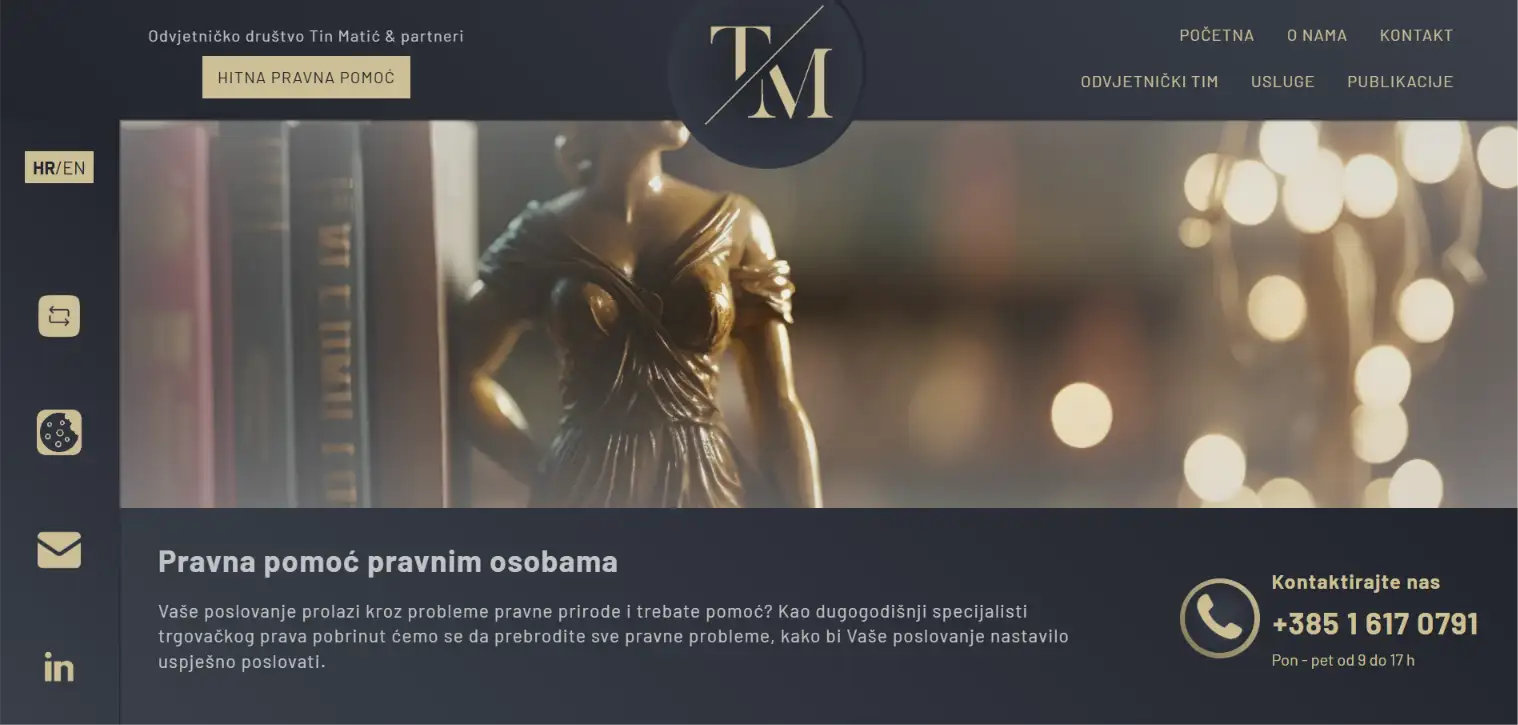
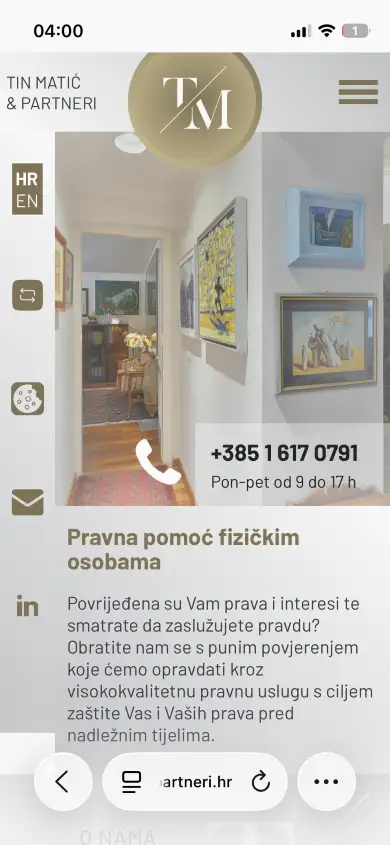
Tin Matić & Partners is a Zagreb law firm working in commercial and international commercial law, arbitration and copyright — one of a small number in Croatia specialised that narrowly. The founder advised the government on Croatia's e-commerce and electronic signature legislation, and the firm publishes in professional journals. The site had to carry that weight without ever saying "we are experienced".
So authority is shown rather than claimed: practice areas named precisely instead of listed generically, lawyer profiles with the actual record behind them, and a publications section that lets the work speak. A visitor with a commercial dispute knows within seconds whether this is the right address — which for a law firm is the only thing the first impression has to do.
The site also ships with a theme switch: four colour combinations, chosen by the visitor. What makes it work is that none of them changes the character. Typography, spacing, structure and tone stay identical; only the palette moves. It is a small feature that quietly demonstrates the larger point — that a design system built properly can flex without losing its identity.
Go to website:
maticipartneri.hrPortfolio - Insurance Representation
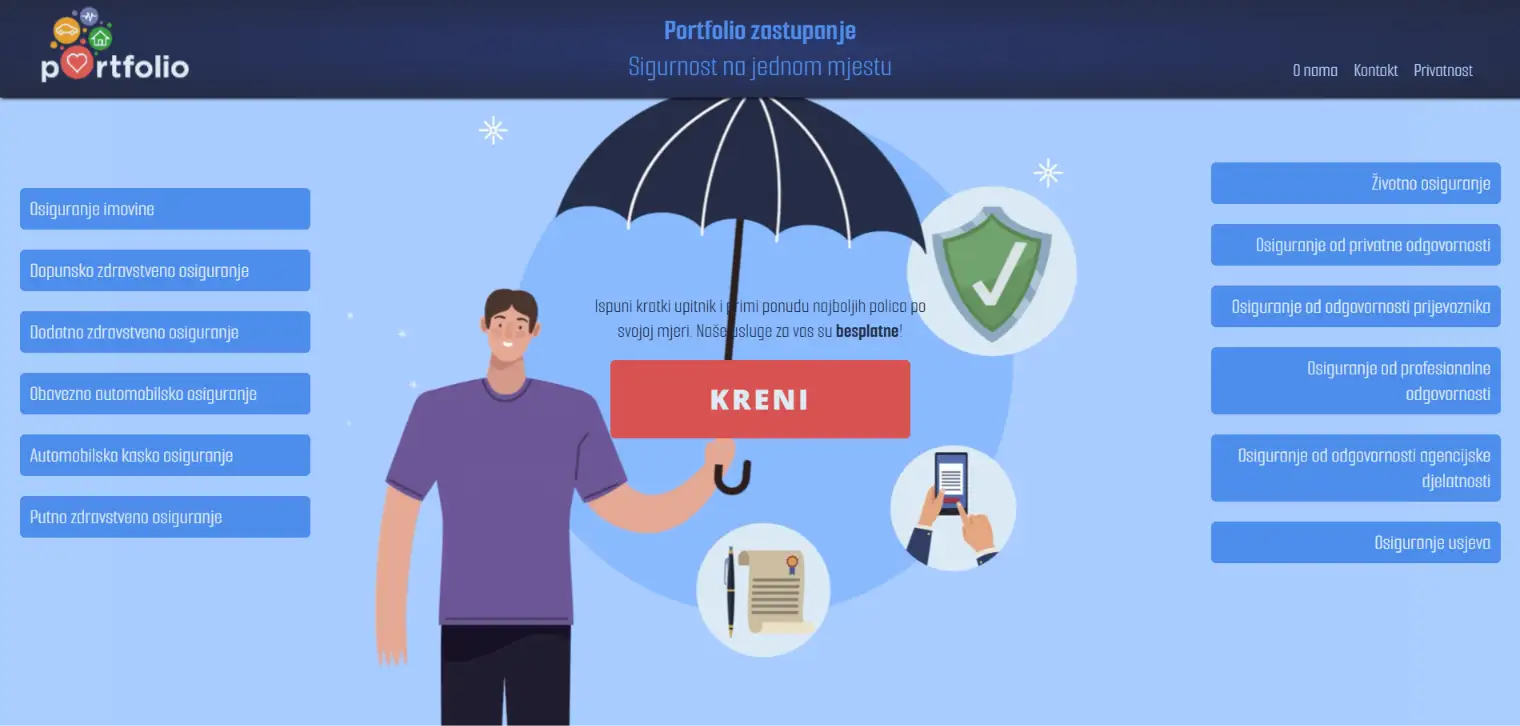
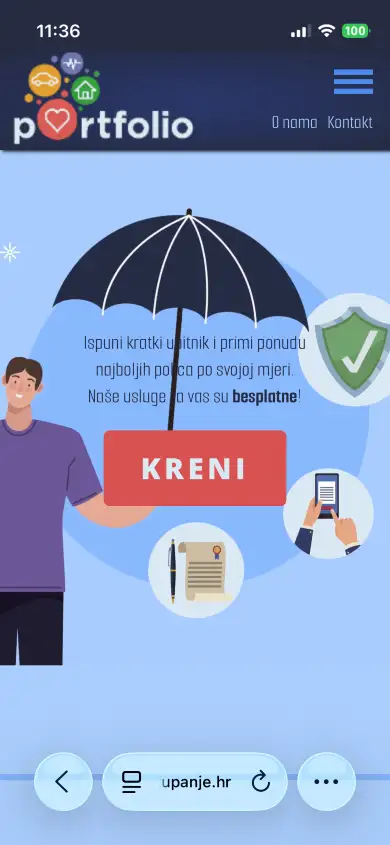
Portfolio is an insurance agency in Požega working with nine insurers, and its service is free to the client — the commission comes from the insurer. That single fact is the whole pitch, so the site says it in the first sentence a visitor reads, before anything else has a chance to get in the way.
Insurance is a field where people rarely know what they need, so the site does not ask them to. A short questionnaire replaces the usual contact form: the visitor answers a few plain questions and the agency comes back with matched offers. What arrives on the other end is not "someone would like more information", but a lead with enough detail to actually quote.
Alongside that, each of the twelve policy types has its own page and its own address — property, supplementary health, motor liability, casco, travel, life, professional and carrier liability, crop insurance. People search for the specific cover they have in mind, not for an agency, and a page per policy is what puts this one in front of them.
Go to website:
portfolio-zastupanje.hrJani transport and logistics
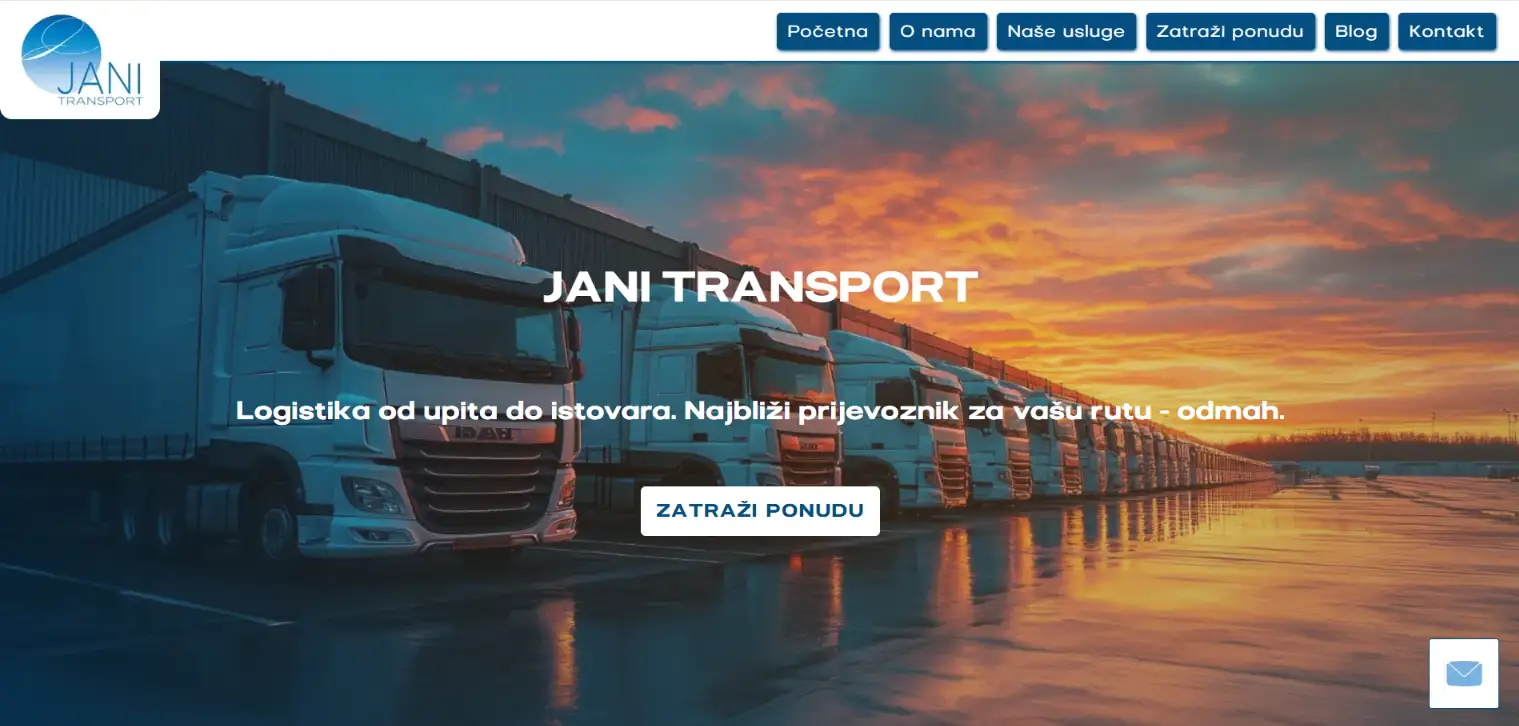
Jani transport organises freight transport across Croatia and the European Union. The company owns no trucks: it finds the nearest available vehicle from a network of vetted carriers, agrees the price and loading date, and handles the shipment and its paperwork through to delivery. The site had to make that clear within seconds, because the first question every visitor arrives with is whether this firm can move their goods on their route. It runs on a custom CMS, so the owners publish news, adjust services and update contact details themselves, without calling anyone. Search and AI optimisation were built in from the start, with structured data and articles answering the questions clients actually ask before they order transport.

Go to website:
jani.hrOne Gear Blog
Notes from the work, not text written to fill space.
Everything here comes out of actual projects: numbers that surprised me, mistakes that cost something, and decisions that turned out to matter later. If a text cannot help you decide something, it does not get written.
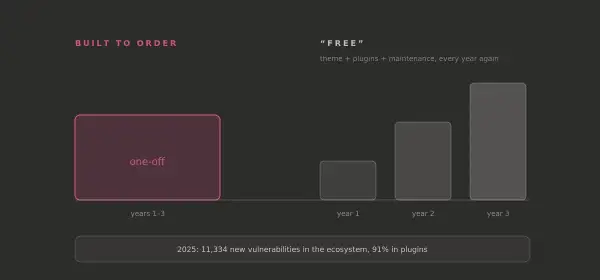
There is no free website. There is only the one you pay for later
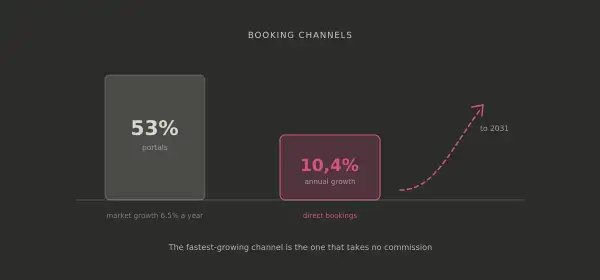
The market moved from "add more beds" to "fill the ones you have"
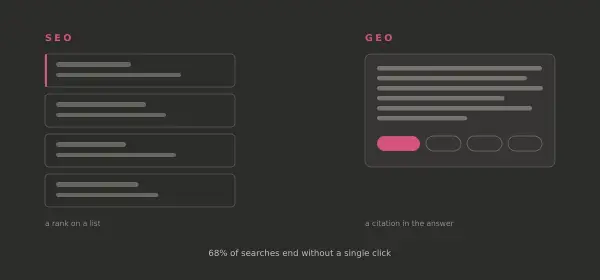
Ten years ago, a search meant a list. Today it means an answer.
Questions that come up
Before you ask
There is no price list, because there is no standard website. Cost follows scope: how many pages and languages, whether there is a shop, a booking engine or an application behind it, and how much of it you want to manage yourself. Tell me what the site has to do and you get a fixed quote, not an hourly estimate that grows along the way.
A business site with a custom CMS usually takes two to three weeks from the first conversation to launch. A webshop or booking system takes a bit longer, an application longer still. The largest variable is rarely the code — it is how quickly the content, photographs and texts arrive.
Yes, and that is the point. Every site comes with an admin panel built for that specific site, so you change text, images, prices and pages without calling anyone. There is no training course and no manual, because if it needs one, it was designed badly.
Yes. Projects run in English, German or Croatian, and most of the sites built here are multilingual anyway. Everything happens remotely, which changes nothing about the work — the only difference is the time zone of the calls.
The site keeps working, and you are not left alone with it. There are no licence renewals and no plugin subscriptions to keep paying, so ongoing cost is usually just hosting and a domain. When something needs changing or extending later, you come back to the person who wrote it.
Clean semantics, structured data and fast pages come as standard, because they are decided while the site is being built. Deeper optimisation — content strategy, GEO, ongoing work on visibility — is a separate service, ordered on its own or agreed as part of the project. How far it goes depends on how much it matters to you.