News Portals
A news portal built for the pace of a newsroom
For an editor, nothing about a website matters more than how long it takes to publish. A CMS that needs three screens and a page reload to put up a breaking story is a CMS that will be worked around. OG CMS is built the other way: open, write, attach a photo, publish — from a desk, a phone or the back of a car.
The reader side is treated with the same seriousness. Sections that look different from one another instead of one grid repeated six times, images framed separately for wide screens and for phones, pages that load on a weak mobile connection, and structured data so the stories surface in search and in AI answers.
See how it turned out.
Bild.ba
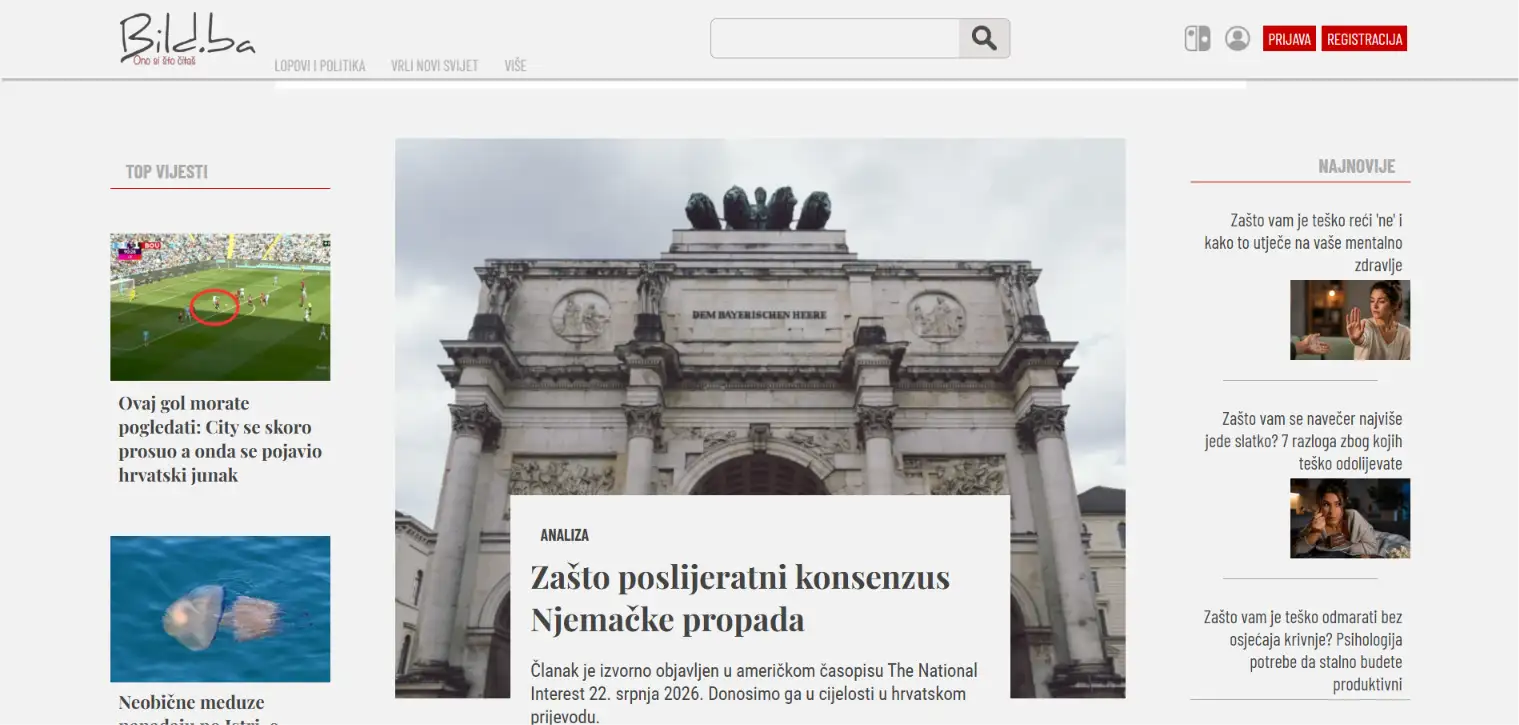
Bild.ba is a news portal from Bosnia and Herzegovina, and the brief was to build one that does not look like every other news portal. The section names set the tone before the design does — Thieves and Politics, Brave New World, Our Stories — and the layout was written to match that voice rather than to fill a standard three-column grid.
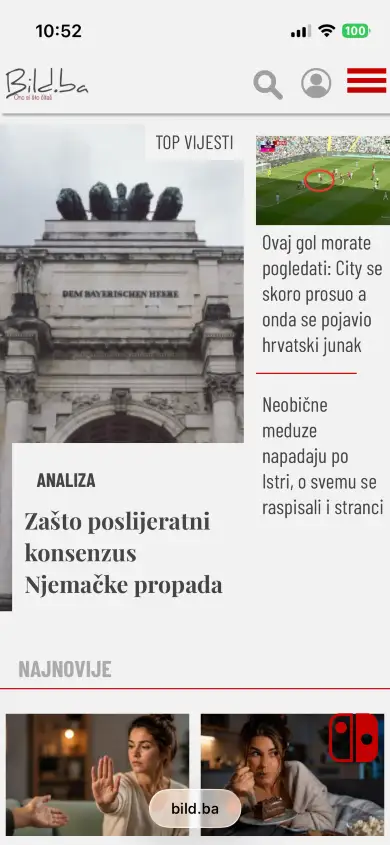
Each section has its own arrangement: a lead story with a kicker, a byline and a timestamp, then a mix of card sizes that shifts from one section to the next, so a reader scrolling the front page never sees the same block twice. Every article carries two separate images, one framed for desktop and one for phones, because a crop that works in a wide lead does not work in a narrow column.
Readers choose the look themselves — light, dark or blue, three complete themes rather than an inverted palette. Add tag pages for the stories people follow, member accounts, and an editorial back end fast enough to publish from a phone, and the portal ends up being what a newsroom actually needs: quick to run, and recognisably its own.
Go to website:
bild.baOfficial website of the Municipality of Podgora
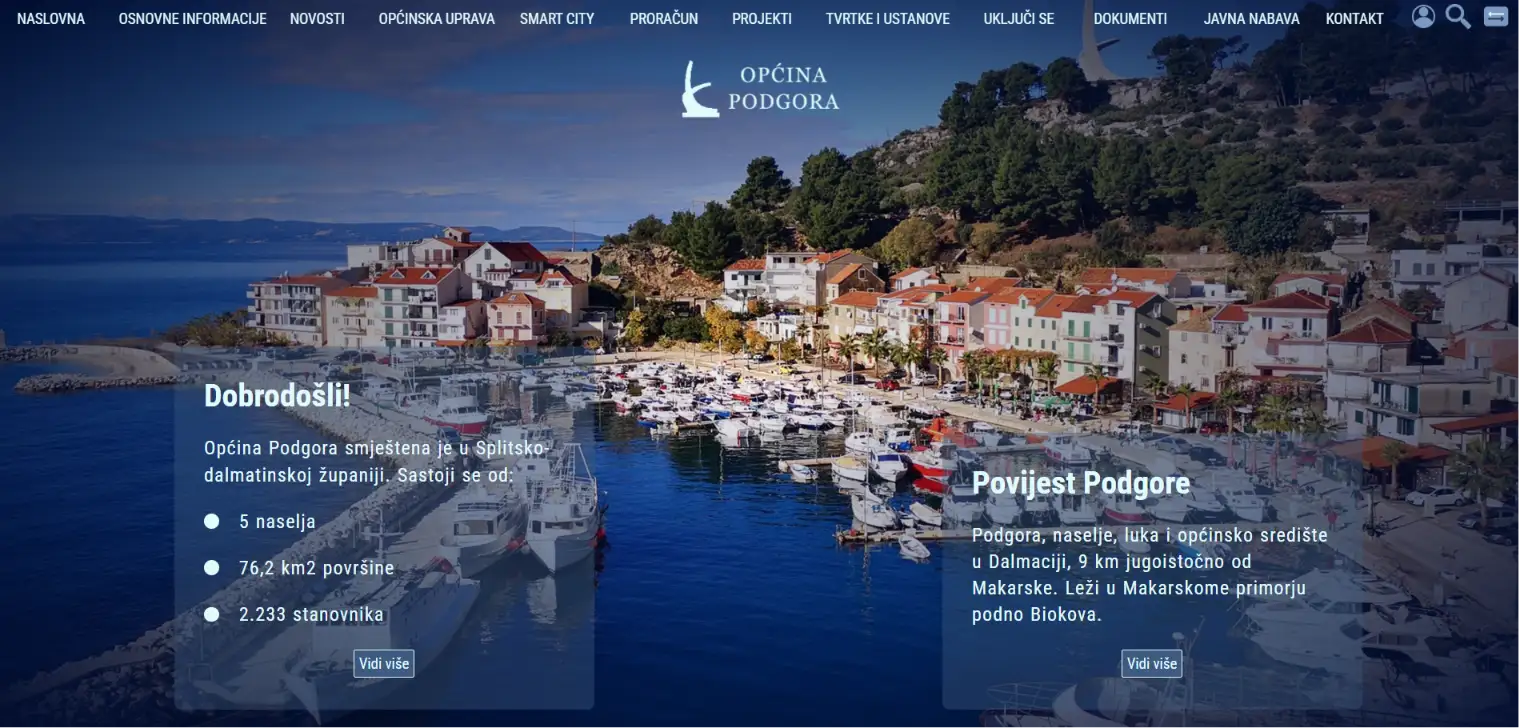
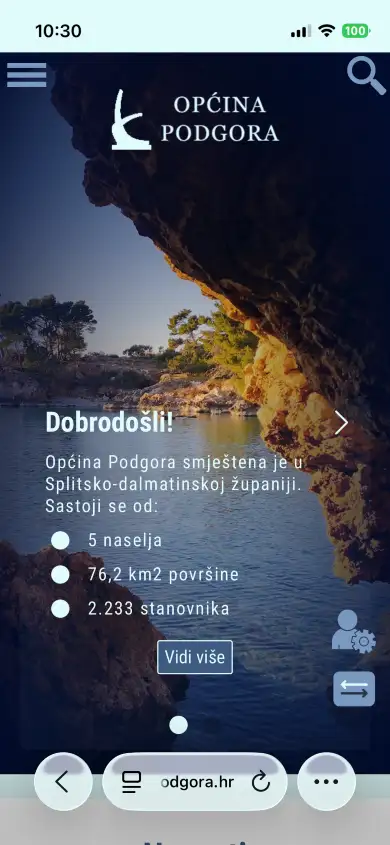
Podgora is a municipality on the Makarska Riviera whose population increases several times during the summer, so its official portal serves two audiences at once: locals who need documents, notices and decisions, and guests who are interested in what is closed, where works are being carried out and where to park.
The site has replaced the outdated installation of a ready-made platform. Everything now stands on a structure written for this municipality — notices and announcements of works published on the day they matter, tenders, budget documents, council decisions, and an administration page that exudes freshness and life like the town itself.
The approach is the same as with other portals here: nothing borrowed from a template, and everything required by law is actually accessible in a click or two, and administrators have a fast and simple OG CMS system with which they can easily update content.
Go to website:
podgora.hrOfficial website of the Municipality of Kali
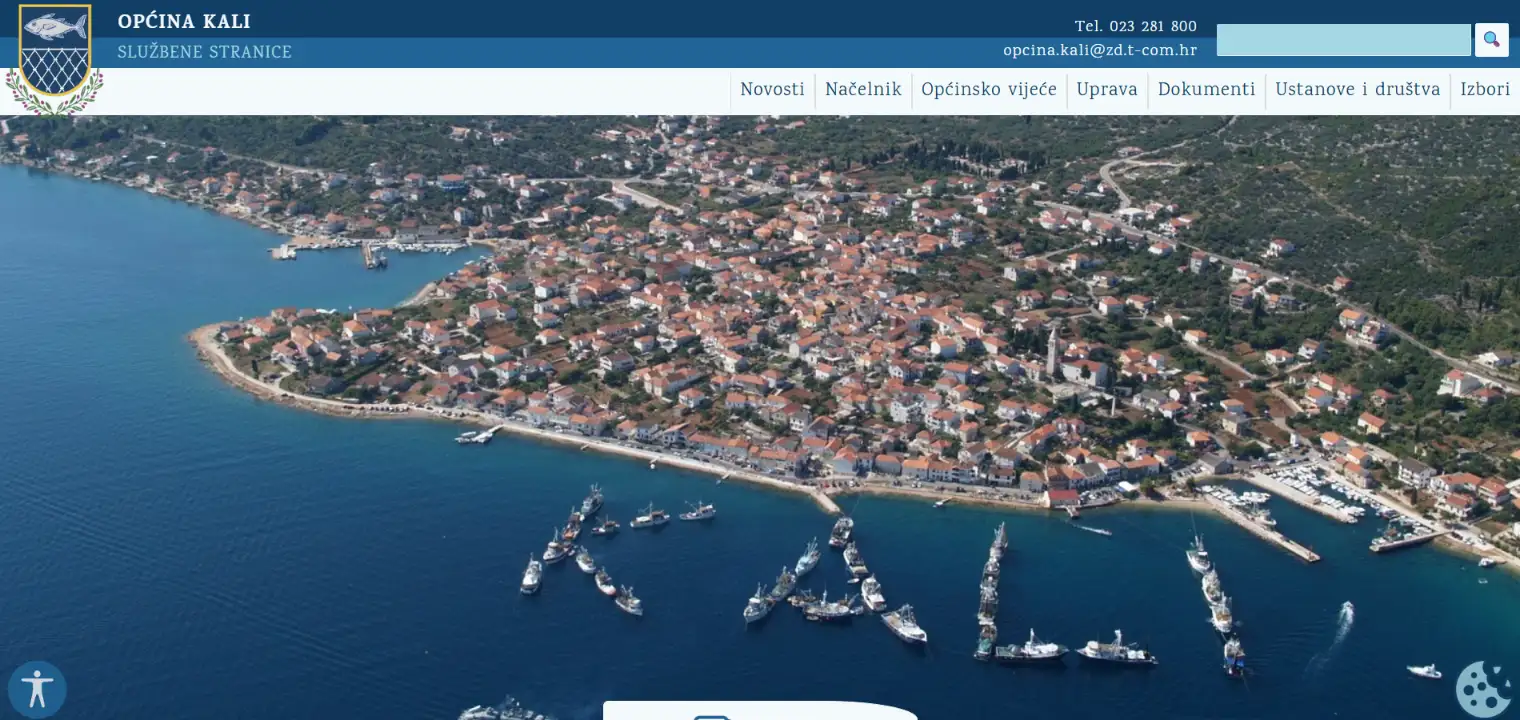
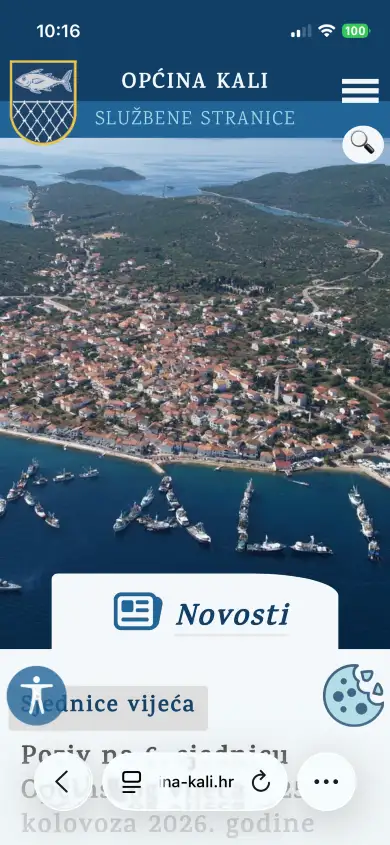
Kali is a fishing municipality on the island of Ugljan, and its official portal is the exception to a rule that holds almost everywhere in Croatia: local government sites tend to be the same aging template, three clicks deep and years out of date.
This one is written from scratch around what residents actually come looking for — the budget, procurement notices, spatial plans, council sessions, public consultations, the official gazette. Everything is a click or two from the front page, published as it happens, and the site is genuinely maintained: the news archive runs to dozens of pages and the newest item is usually days old.
It also works as a hub rather than a dead end. Residents report a broken street light through Popravi.to, look up every payment from the municipal budget in a searchable public register, and take part in advisory e-referendums and rate the administration through a dedicated e-democracy platform. There is an accessibility statement, as the law requires — and, unusually, a site behind it that actually meets it.
Go to website:
opcina-kali.hrOne Gear Blog
Notes from the work, not text written to fill space.
Everything here comes out of actual projects: numbers that surprised me, mistakes that cost something, and decisions that turned out to matter later. If a text cannot help you decide something, it does not get written.
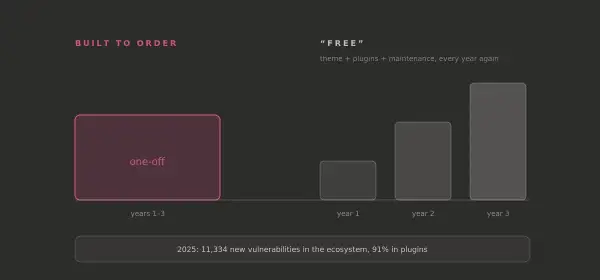
There is no free website. There is only the one you pay for later
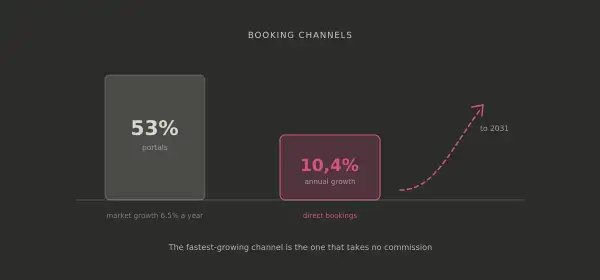
The market moved from "add more beds" to "fill the ones you have"
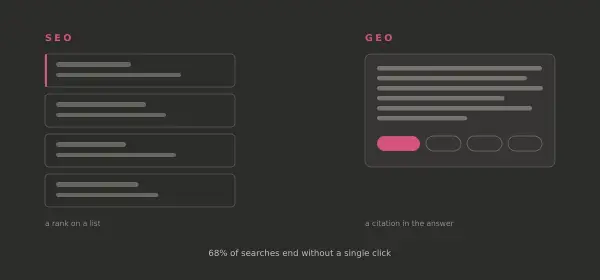
Ten years ago, a search meant a list. Today it means an answer.
Questions that come up
Before you ask
There is no price list, because there is no standard website. Cost follows scope: how many pages and languages, whether there is a shop, a booking engine or an application behind it, and how much of it you want to manage yourself. Tell me what the site has to do and you get a fixed quote, not an hourly estimate that grows along the way.
A business site with a custom CMS usually takes two to three weeks from the first conversation to launch. A webshop or booking system takes a bit longer, an application longer still. The largest variable is rarely the code — it is how quickly the content, photographs and texts arrive.
Yes, and that is the point. Every site comes with an admin panel built for that specific site, so you change text, images, prices and pages without calling anyone. There is no training course and no manual, because if it needs one, it was designed badly.
Yes. Projects run in English, German or Croatian, and most of the sites built here are multilingual anyway. Everything happens remotely, which changes nothing about the work — the only difference is the time zone of the calls.
The site keeps working, and you are not left alone with it. There are no licence renewals and no plugin subscriptions to keep paying, so ongoing cost is usually just hosting and a domain. When something needs changing or extending later, you come back to the person who wrote it.
Clean semantics, structured data and fast pages come as standard, because they are decided while the site is being built. Deeper optimisation — content strategy, GEO, ongoing work on visibility — is a separate service, ordered on its own or agreed as part of the project. How far it goes depends on how much it matters to you.