Cookies
Two cookies. One remembers your language, the other guards the form.
No analytics, no advertising, no tracking, and nothing from anyone else. This site sets exactly two cookies, both for reasons you would probably ask for yourself if they were missing. Here is what each one does and how to get rid of it.
What a cookie actually is
A cookie is a small text file a website stores on your device so it can remember something between one page and the next. Nothing more mysterious than that. A cookie cannot read your files, run a program, or see anything on your computer beyond what it wrote there itself.
The language cookie
This site exists in English, Croatian and German. When you switch language, that choice has to be remembered — otherwise every link you click would drop you back into the language you started with.
The cookie stores one value: the language you picked. Nothing else, no identifier, no history of where you have been. It is set only when you actually change the language, and only with your consent. Decline, and the site simply works in the language it opened with.
The form cookie
When you send an enquiry, a temporary cookie is set to protect the form from abuse. It carries a one-time random value that confirms the message came from this page and not from somewhere else pretending to be you — the standard defence against a class of attack known as cross-site request forgery.
This one is strictly necessary: without it the form cannot be submitted safely, so it needs no consent under the rules on electronic communications. It disappears when you close the browser.
What is not here
No analytics, no advertising networks, no social media pixels, no tracking across sites, and no cookies from any third party. Nothing about your visit is passed to anyone.
How to remove them
Every browser lets you delete or block cookies, usually under Settings, then Privacy and security. Removing them here costs you very little: the site will forget your language choice, and the form will ask for a new security token the next time you use it.
Everything else
What happens with the details you send through the form — what is collected, why, for how long, and what rights you have — is set out in the privacy policy.
Stroge mjere d.o.o., Miroslava Krleže 6, 34000 Požega, Croatia · OIB 85773693836 · info@og-web.com
Last updated: 2026/08/27
One Gear Blog
Notes from the work, not text written to fill space.
Everything here comes out of actual projects: numbers that surprised me, mistakes that cost something, and decisions that turned out to matter later. If a text cannot help you decide something, it does not get written.
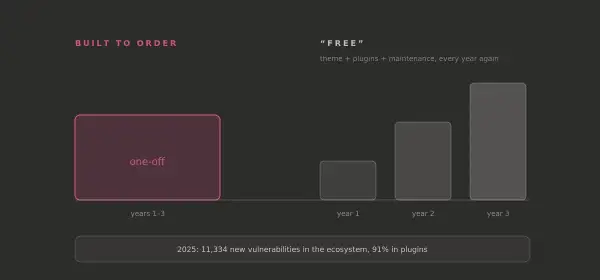
There is no free website. There is only the one you pay for later
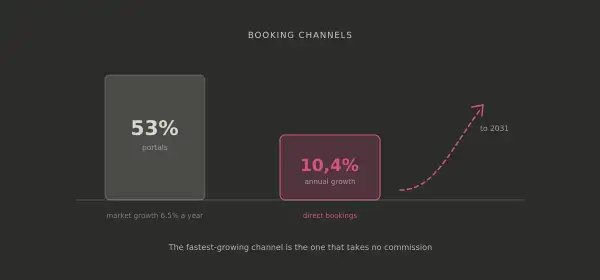
The market moved from "add more beds" to "fill the ones you have"
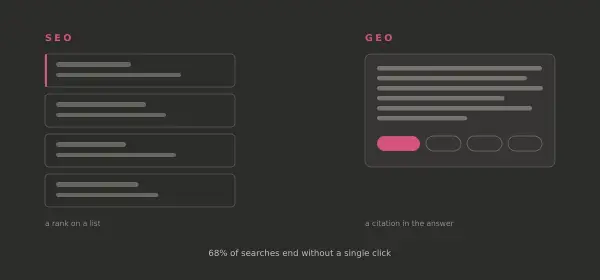
Ten years ago, a search meant a list. Today it means an answer.
Questions that come up
Before you ask
There is no price list, because there is no standard website. Cost follows scope: how many pages and languages, whether there is a shop, a booking engine or an application behind it, and how much of it you want to manage yourself. Tell me what the site has to do and you get a fixed quote, not an hourly estimate that grows along the way.
A business site with a custom CMS usually takes two to three weeks from the first conversation to launch. A webshop or booking system takes a bit longer, an application longer still. The largest variable is rarely the code — it is how quickly the content, photographs and texts arrive.
Yes, and that is the point. Every site comes with an admin panel built for that specific site, so you change text, images, prices and pages without calling anyone. There is no training course and no manual, because if it needs one, it was designed badly.
Yes. Projects run in English, German or Croatian, and most of the sites built here are multilingual anyway. Everything happens remotely, which changes nothing about the work — the only difference is the time zone of the calls.
The site keeps working, and you are not left alone with it. There are no licence renewals and no plugin subscriptions to keep paying, so ongoing cost is usually just hosting and a domain. When something needs changing or extending later, you come back to the person who wrote it.
Clean semantics, structured data and fast pages come as standard, because they are decided while the site is being built. Deeper optimisation — content strategy, GEO, ongoing work on visibility — is a separate service, ordered on its own or agreed as part of the project. How far it goes depends on how much it matters to you.